A casino game is most exciting when just the right number of variables are in play. Make the game too complex, and it’s better-suited for the bridge table. Make it too simple, and you might as well be watching kids play war.
Similarly, Ballad of a Small Player is at its most engaging early on, when we don’t quite know the characters — or, more to the point, know what the movie wants us to make of them. As the film goes on and the characters’ orientations become more clear, the human interest drains away. Whether the movie ends well or badly for the eponymous player, we don’t much care because he’s so much less interesting than he was at the outset.
The player is named Lord Doyle (Colin Farrell), and he’s nothing if not confident. Overextended during a gambling spree in Macau, he continues to borrow, convinced that his luck will eventually change. When another player in similar circumstances throws himself off a building, Doyle dismisses the act as “a permanent solution to a temporary problem.”
The man has swagger, and the fact that we can’t tell whether he has the skill and nerves to back it up lends suspense to his developing relationship with Dao Ming (Fala Chen), who lends money out of pockets that aren’t her own. Will the pair double down, or make an escape?
Based on the 2014 novel by Lawrence Osborne, Ballad of a Small Player is the latest film by Edward Berger, an Oscar-winner for All Quiet on the Western Front (2022). Small Player continues on in Wagnerian fashion, complete with a bone-shaking score by Volker Bertelmann.

The tone is very different than the breezy Ocean’s 11 vibe we associate with casino movies, which is potentially an interesting choice — except it doesn’t quite land right, because it seems certain Macau has much more treacherous depths than these characters find themselves in. Threat to life and limb is always at a remove, with Doyle’s creditors represented by a nervy but technocratic Tilda Swinton. Don’t make her notify the authorities!
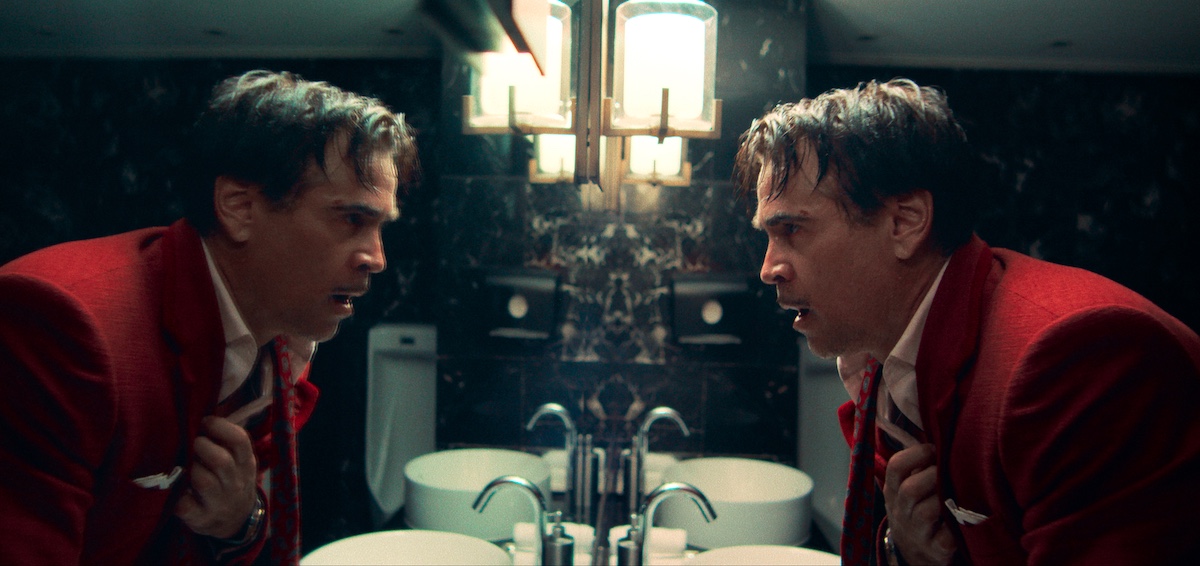
Berger’s heavy hand particularly costs the film when it comes to Doyle’s addictions: gambling, alcohol, whatever else you have to offer. Sweating, gasping, and blacking out, Doyle reaches Cronenberg levels of unwellness. Complemented by reference to a “Hungry Ghost” figure from Chinese folklore, Doyle’s struggle with his demons becomes the film’s focal point — to diminishing returns, because we’ve seen that story before.
Like a losing gambler, Ballad props itself up by injecting stakes, and pulls off the nifty feat of centering the action on baccarat: a game that most people who aren’t James Bond or one of his antagonists don’t have the slightest idea how to play. Still, the movie can’t make up for the reduction of its central relationship from a dynamic negotiation to a player-cheerleader dynamic.
Farrell’s performance is the kind an actor is said to be “fully invested” in: he skillfully tracks the nuances of Doyle’s fraying front and puts up a heroic fight at the end. The film is also visually sumptuous, exploring its rich setting from the bright lights to the tidal flats. It’s quite a ride, but the destination is all too common.
Images courtesy Netflix
Leave a Reply