Is there anything more redolent of the 20th century monoculture than a fascination with the inner life of Johnny Carson?
The hold Carson had on the nation’s attention in the late-night hours, most weeknights for 30 years, is difficult now to imagine. Tonight’s late-night hosts only pull a fraction of his numbers, even while following a formula he set in stone. The band, the announcer, the monologue, the desk, the couch, the skits. The formula still works, but the world has changed. No one will ever again be the default, as Carson was.
“Default” is not a very exciting way to describe a show-business professional, but the marvel of Carson was that he never wore out his welcome. The host had a sure sense of his skills and his limitations, including knowing exactly when to bow out. He said the May 22, 1992 episode would be his last, and it was. He went out on top, living out his 13 remaining years enjoying private pursuits like yachting and learning Swahili.
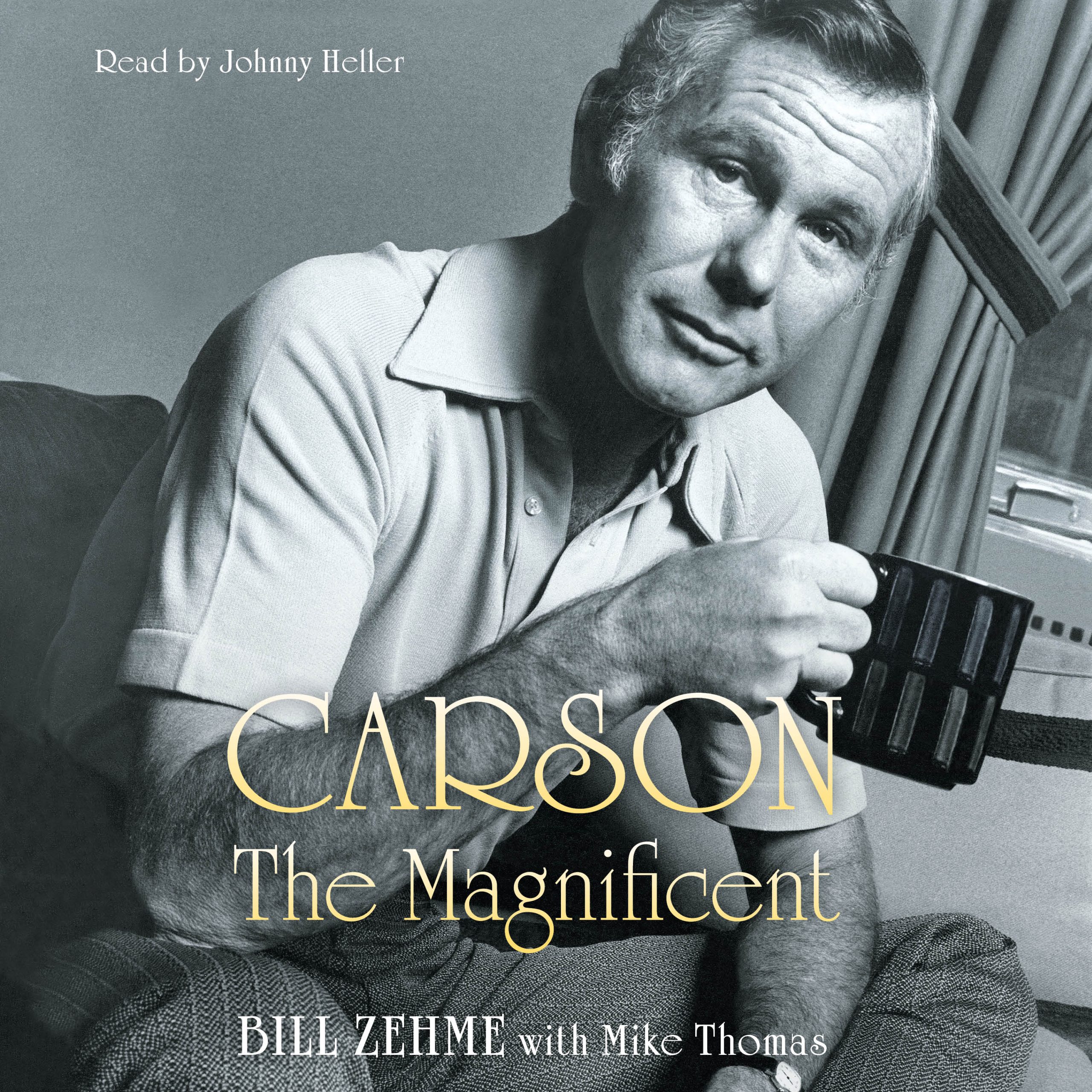
Carson became such a legend that it took a legend to write his biography; such is the impression we’re given by Mike Thomas’s prologue to Carson the Magnificent. The principal credited author, Bill Zehme, was a respected celebrity journalist who died in the course of completing his most ambitious project: a definitive biography of one of the most familiar yet elusive figures in the television era. Thomas, a protege, completed the book.
The authors’ sympathetic view is that Carson was hiding in plain sight: he was his truest, best self in front of the camera. His advice to Conan O’Brien, who had Carson’s old job for an infamously brief stint before the network handed it back to the uninspiring Jay Leno, was simply “be yourself.”
“If it’s going to work, that’s the only way it can work,” O’Brien says in the book by way of explaining Carson’s meaning. Someone who’s on the air daily performs a character, but if it’s not rooted in their authentic nature, it won’t be sustainable. Carson’s performance was nothing if not sustainable.
Carson the Magnificent is gratifyingly brief, at just 336 pages or just over a nine-hour listen. (Gravel-voiced narrator Johnny Heller performs the book largely with aplomb, although his penchant for imitating voices plays better for Ed Sullivan than for, say, Arsenio Hall.)
The book feels complete at that length because the authors carefully define their mission: they don’t walk readers through Tonight Show highlights beyond a few representative examples. They don’t tell us how Carson grappled with 1968, or 1974, or “Weird Al” Yankovic. They don’t delve into Carson’s role as a comedy kingmaker (thus dodging examination of his preference for male stand-ups) or dissect the finer points of his craft.
Instead, the authors stick to their most fundamental task: telling readers what made Johnny Carson tick. He was a born showman, we learn, and a calculating one: his early talent of choice was magic, a field requiring careful study and discipline along with the charisma required to point viewers’ attention in the desired direction. A magician doesn’t need to have a big personality, because the trick is the star. What a magician needs is to remain subtly in control.
That was precisely what Carson did on air, his success a result of long experience, deliberate preparation, and a gift for improvisational humor. As Zehme and Thomas note, Carson’s willingness to look foolish became the ingredient that sealed his invincible air of cool: he framed every sketch, every interview, as a semi-detached viewer with a perspective just outside the frame. That allowed him to recover from the inevitable duds by looking into the camera, anticipating the viewers’ groans and effectively joining them.
Readers will be unsurprised to learn that Carson had personal failings, and while shameful, they were also standard-issue for a white straight male celebrity of Carson’s era. He drank and raged, he womanized, his sons were pained to see him paying closer attention to his occasional child guests than he did to his own flesh and blood. He was married four times.
In the end, he gave his best to the work, and his viewers and colleagues rewarded him for it. His longest professional relationship, with quintessential sidekick Ed McMahon, was non-negotiably defined and met the needs of both parties.
The book’s most colorful, intriguing material dates to the pair’s association before The Tonight Show, when they were host and announcer on the game show Who Do You Trust? They would hit the town after hours, McMahon recounted, but always on Carson’s terms: McMahon didn’t even dare to ask Carson directly whether he’d be joining the host in his new late-night gig.
(The book’s queasiest revelation involves a note Carson left for McMahon’s daughter Claudia when she was in junior high, after one of the several occasions when she lent her bedroom for the host to crash in after he hung out with her dad. On an 8×10″ glossy photo of himself, Carson wrote, “To Claudia: some time you must come sleep in my bed.” Johnny and Ed “got a real big laugh out of that,” according to Claudia.)
Carson the Magnificent doesn’t unfold in linear fashion like a conventional biography; instead, it’s structured like an extended magazine profile, opening with the fascination of Carson’s decisive retirement and retreat from the spotlight.
The picture of that era that emerges is all fans could have hoped for, with Carson occasionally submitting uncredited zingers to David Letterman and enjoying leisurely lunches on the patio at Arnold Schwarzenegger’s restaurant. When a pigeon wanders over, Carson looks down and asks, “Any messages?”
It’s a credit to Zehme and Thomas that the book leaves readers wanting another volume — not a sequel, but a book that dials out and looks at the larger landscape that created a job like Carson’s. One could imagine Emily Nussbaum writing it, exploring how the Tonight-style talk show pioneered the para-social relationship between host and viewer that’s integral to today’s creator economy.
With his hustle, focus, and quick wit, the youth who billed himself as “the Great Carsoni” would probably have been a hit on TikTok. Today, of course, he’d have a lot more competition than he did on the mid-century airwaves. Might that have been better for everyone, Carson included? Would he have been a happier man if he didn’t have to carry the culture on his shoulders?
While a latter-day Carson couldn’t have a legacy as storied as that of the Carson who did exist, it’s ultimately hard to miss a world in which there could only be one King of Late Night, slipping into every bedroom in America whether we liked it or not. Mostly, we did.
Leave a Reply