
“Oh no!” my boyfriend shouted one day when I was driving.
This is not something that should ever be uttered when I’m behind the wheel. “What?” I shouted back, worried that, maybe, a baby had toddled onto the road or something equally horrible.
“Brave is getting bad reviews!”
We were both, along with probably everyone else in America, excited about Brave. I am a sucker for girl-kicking-ass stories, and he loves Pixar.
“Don’t read the reviews,” I told him. “They’ll just prime you to watch it differently.”
But nonetheless it was hard to ignore headlines, tweets and comments like, “Brave is just plain bad storytelling for boys and girls alike!”
We went to the movie last night both ready to hate it. I was prepared to be bored, shocked, horrified, and even let down as a woman, assuming that this was a movie written to reaffirm the idea of a female protagonist in general.
But this never happened. The movie kind of reminded me of Tangled, but a lot less stupid and a lot more … well … “neat.” I loved the bizarre Scottish kings. I liked the mom-daughter tension and redemption. I even liked how, bizarrely, it was kind of a movie about humans making friends with bears (?). I couldn’t help but think that my 4-year-old niece would love this movie, and that it might enlighten her to the fact that she can reconcile her love of princesses with any tomboy inclinations she might have as well.
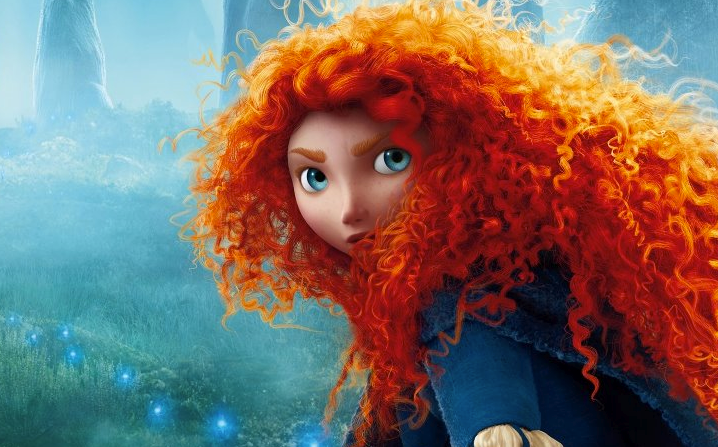
My boyfriend pointed out that the “tomboy princess rebelling against her parents narrative” was “played-out,” but I disagree. That’s just one of those archetypal narratives that will be re-imagined forever and ever. Try killing little girl’s love of princess movies. It can’t be done. My love of rebellious princesses with insanely beautiful hair is innate. And boy was Merida’s hair amazing. It looked real, but from another dimension, where people have teardrop-shaped faces.
The problem with Brave was that it felt more like a Disney movie than a Pixar movie, and that’s probably why people felt disappointed. The humor was slapstick in the way that talking candles or seagulls might be, more than the witty, cultural-refrencing humor of a movie like Finding Nemo. Pixar has been accused of being a “boy’s club,” so it is a bit disappointing that they felt they had to act like Disney to appeal to girls.
My failure to hate Brave got me thinking about something I heard on the On the Media podcast. NY Mag writer Emily Nussbaum was on, discussing the theory she formulated with fellow writer Adam Sternbergh called “the undulating curve of shifting expectations.” As she explains, exposing people to negative headlines or warnings “doesn’t actually qualify as a spoiler. It actually qualifies as a gift to another person in which you lower their expectations such that they enjoy what happens next more.”
At first I thought this idea was B.S. until I ended up having a pretty fun time watching Brave. After looking at some of Emily and Adam’s NY Mag charts actually plotting out this phenomenon, I realized I had come to a similar conclusion from a different angle at some point as well. The less pretense a piece of media has, the more we get to simply enjoy it.
So here’s the deal: Brave is not Pixar-meets-The Hunger Games. It’s not even Mulan. If anything, it’s more a beautifully-animated Disney story. Now that your expectations are nice and low, you can go enjoy it. Bring your favorite little kids.
Leave a Reply