The Tangential

Don't be boring. Don't suck.

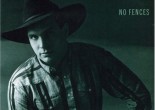
The 1990s Project: Garth Brooks’s “No Fences”

All right, Garth Brooks, that’s it. Thanks to you, I’ve now, finally, completely lost patience with contemporary country music. I’m not happy about this, but you’ve pushed me over the edge.

If you want to have credibility as an open-minded writer about music, it’s not like you want to dismiss an entire genre of music, by some measures the most popular in America. It would be better to take the New Yorker route and find merit in Keith Urban’s grit, sing the praises of Kenny Chesney’s inventive songwriting, and compose odes to the gifts of Swift. That attitude says, “I may live in a blue state, but I don’t hate America.”

I don’t hate America. I just can’t take any more of the obnoxiously reactionary version of America represented by Garth Brooks and his ilk.

In my post on Shania Twain, I told the tale of my former relationship with a country music lover and my failed attempt to appreciate pop country music. If most pop country music was like Come On Over, I’d at least get it: that album isn’t exactly profound, but it’s full of great melodies and lyrics that are unpretentious in a good way—or at least not in a bad way.

But here we have Garth Brooks, a man who’s sold more albums in the SoundScan era (1991-present) than any other artist. This is the first time I’ve ever sat down to listen to one of his albums front to back, and wow, this man is country. He lays that accent on thick—he was born in Tulsa—and unlike the peppy Twain, he’s not afraid to leave a lot of tears in his beer. No Fences (1990) was the album that contained his singalong hit “Friends in Low Places,” but much of the album is occupied with dirge-like balladry. If given this album and Nevermind in the early 90s, it might be hard to believe that Kurt Cobain would be the one to shoot himself.

Opener “The Thunder Rolls” at least stabs in the direction of a possibly substantial character-driven drama, but Allen Reynolds’s production is lugubrious; tellingly, it was at Reynolds’s suggestion that Brooks omitted his original final verse hinting at fatal violence. The album then plows right into the ground with the plodding (and ironically titled) “New Way to Fly,” and never picks itself back up.

“Two of a Kind” is the sort of number that Twain might have made sexy, but Brooks renders like a guy leering at you over a beef jerky display. “Unanswered Prayers” ventures into the kind of theology that would make Marx run for his Maalox, and “Wild Horses” takes the California pop-country sound that Linda Ronstadt once made soar and ropes it to a flatulent Clydesdale.

At the album’s summit (such as it is) is “Friends in Low Places,” a song that essentially defined the agenda of pop country music for the next two-plus decades. Complete with lyric (not lyrical) dis of the “ivory tower,” the song sets Brooks in contrast to a caricatured fancy boy who’s stolen his lady. Unapologetic and rambunctious, Brooks retreats into the arms of his beer-swilling “friends in low places.”

“Friends” encapsulates everything that’s wrong with contemporary country music, and everything that’s wrong with the red-state culture that cradles it. The hardest thing about listening to country music today is that the music doesn’t want to change, doesn’t want to be different. Top 40 music has its patterns and its copycats, but one of the great things about Top 40 radio is its never-ending weirdness—you never know when you’re going to get an “I’m Henry VIII, I Am” or a “Macarthur Park” or, more significantly, a song like “When Doves Cry” that breaks a rule (no bass guitar?!) in a way that opens new possibilities.

Country music obstinately clings to that accent and those steel guitars and those motherfucking fiddles, because that’s what “America” supposedly sounds like and if you want something different, you’re just one of those power-hungry friends-in-high-places who doesn’t care about your wife or your kids or your country.

Fortunately, America in actuality is a lot more than this, even if Brooks’s fans don’t like it. When Brooks tried to change his identity and sound in 1999—the infamous “Chris Gaines” experiment with pop rock—his fans recoiled, and drove him right back into his cowboy hat. I’ve never heard the Chris Gaines album and I have little confidence that it’s any good, but it seems telling that neither Brooks nor his fans were able to abide any artistic experimentation that took them too far out of their comfort zone.

Well, that’s fine for y’all. You can stay in your low places. As the braver, more adventurous country artist Loretta Lynn said on record to collaborator Jack White, “let’s leave these boys to drown in their drink.”

Jay Gabler


The 1990s Project is my attempt to give the decade’s music a fair shot at disproving my offhand assessment that the 90s were the armpit of modern musical history. My goal is to visit, or revisit, 100 of the decade’s most acclaimed, popular, and/or interesting albums. Here’s the road map.

17 responses to “The 1990s Project: Garth Brooks’s “No Fences””

  1. Sarah Moeding Avatar
    Sarah Moeding

    As a lover of Garth Brooks, and of country music, this makes me very sad, Jay. Of the country music popular on CMT and radio in the early 90s, which I grew up immersed in in rural South Dakota, Garth’s is the most open-minded and interesting stuff there is, aside from Dwight Yoakam. Garth famously spoke out for gay rights, and even alluded to it in his music. And that verse at the end of The Thunder Rolls was recorded, and even heavily played on country radio at the time; it was thrilling and fun. It may seem like it’s a genre rooted heavily in not-changing, but that’s because it is essentially folk music for farmers and rodeo people living in small communities–that IS their lives. Even as a kid living in town, country music spoke more to the things I saw around me than anything else did at the time. I came to Volga, SD in 1991 with no love for or interest in country, but left in 1994 with a deep and lifelong affection and respect for it. Things in country music in the early 90s didn’t have the America, fuck yeah stuff it does now, the jingoism of your average Toby Keith… It was both humble and cocky, and it was great. 

    1. Jay Gabler Avatar

      Folk music will always have its place, and offer its comforts, but as Dylan saw in the 60s, a marked preference for traditional forms can be destructive, a fixation on the past that precludes an engagement with the future. It’s not for me to judge Garth Brooks’s character as a man, or his listeners’ needs, but in retrospect it seems that the boom in Brooks’s popularity was part of a boom in music that’s founded in a romanticized (not to say revisionist) version of America’s reality. I can’t argue with your observation that Brooks is ethically (if not musically) progressive for his niche, and maybe you’re right that Garth Brooks is what 70 million people need. The idea, though, makes me think of a line from 10,000 Maniacs: “It’s awful sad we need boys like you.”

      1. Sarah Moeding Avatar
        Sarah Moeding

        The point I was trying to make was that the lives of people who listen to country music are the lives of folks whose lives don’t change. There may be advances in herbicides and farm equipment but outside of that, the livin’ and lovin’ of someone who lives in a rural community largely remains unchanged. The music reflects that. It’s a shame that the jingoism has come into play since 2001, as the music used to reflect a pride in America as it stands and not as an entity to be revered above all, but I’m sure that will fade too. 

        1. cp Avatar
          cp

          Then again, we probably know tons of people who love punk, indie, classical, and jazz who haven’t changed much since the Reagan administration.

          In fact, I’d venture that most people don’t change much.

        2. Becky Lang Avatar

          ho-lee crap. friends in low places rocks. garth brooks is creepy. this thread is wild.

  2. cp Avatar
    cp

    Thanks for saying a lot of what I was thinking, Sarah. I spent some time thinking about why this review rubbed me the wrong way.

    One,  it has a lot to do with where I grew up (Red River Valley–farm country).  Sarah is spot-on in her description of this music helping to tie groups of people together. EVERYBODY knows Garth Brooks where I’m from, whether you’re 80 or 18. We can all sing along at weddings and bars, and the meaning of the songs (emphasis on community, family, common emotional turmoil we all experience). But the thing is, it’s not just where I’m from–it’s where many people are from all over the country. And I don’t even like country  music that much!

    Second, country music is narrative. It bases its efficacy on a story. You typically aren’t waiting for a guitar riff in the middle of a Brooks and Dunn song. You can make the argument that folk music is narrative, but it is politically narrative. Merle Haggard doesn’t give a shit about politics in his songs about fucking up his relationship with his lady. And Brook’s tendencies, turning country music from the 60’s and 70’s into a more “palatable” pop version, are no different.

    Third, country  music is technically astute, but not so much creatively innovative. I think this ties back in to the narrative, actually. Sure, I bet many country songs are pushing the country envelope (huh?), but because the importance of the song is in the story and the sing-along refrain, things like a super-innovative use of steel slide guitar isn’t needed. I’m pretty sure this is why so many country musicians share the same session musicians–they are technically strong and play well within the parameters of the most appreciated country music.

    Fourth, country music is white music. It supports and aggrandizes it’s own myth in the same way that hip-hop holds up some remarkable stereotypes. I don’t know that everything said in contemporary country music is as redneck as Toby Keith, but to dismiss it all in one broad stroke seems a bit too easy. 

    In general, it’s been an interesting experience for me to read these reviews,  primarily because I totally disagree with you on most. Interesting stuff,  because we’re essentially the same age and it blows my mind that we have such vastly different views on music appreciation. I readily admit that since I was in my early teens to early twenties during the 1990’s, most of these albums I just can’t divide from my prior experiences and emotions. And that is the power of music.

    1. Jay Gabler Avatar

      Thanks for reading and commenting, C.P. Where I’m coming from with this project is that I actively shunned 90s music in the 90s, because I had the hunch that 90s music kind of sucked and that I’d be better off checking out other stuff—so now there’s this music that means so much to so many people our age, but a lot of which I’m unfamiliar with. So now I’m going back and giving it another chance, with (for me) mixed results.

      I appreciate what both you and Sarah have said, and you’ve both lived in the kinds of rural communities I haven’t—so you can see country music from an inside perspective in a way that’s harder for me to do. I was being a little sensationalist in saying that Garth Brooks has finally caused me to give up on all contemporary country music, but I feel like I keep giving contemporary pop country music (as opposed to alt country) a chance to bring me some pleasure or to mean something to me, and it keeps letting me down. Shouldn’t truly great music be able to transcend those sorts of boundaries?

      1. Sarah Moeding Avatar
        Sarah Moeding

        If you’d like a little more progressive pop country from the 90s, I’d suggest Dwight Yoakam’s This Time or If There Was A Way. Pocket of a Clown probably speaks more to what you’re looking for, and in general, Dwight took a slightly more Roy Orbison-infused route vocally, and his subject matter skews toward the flashy rebel-cowboy than it does aspects of farming or rodeo life.

        To give you some perspective on life in rural South Dakota: you were “town kids” “farm kids” or “rodeo kids”. Living in town, you were kind of bottom of heap. Sure, the rich kids in town were still popular as rich kids always are, but there was always a “you can’t understand us” vibe from the farm kids. I got that especially because I’d moved from a “big” city; Aberdeen. Where the population was 24,000. Volga was 1,221 at the time. Our school, Sioux Valley, was a consolidated building, elementary through high school, and taught kids from Volga, Bruce and Sinai (pronounced Sigh-nee-eye) as well as farms for a 10 mile radius. We were required to take agriculture classes, in which I learned how to weld and identify different kinds of cattle (I think I only remember Holstein and Brahma at this point). The elements contained in contemporary country music are on one hand folk in the traditional sense, but they are also as progressive as the reality of the people the songs are about. The lifestyles of town, farm and rodeo people don’t change, so why would their music?

        1. Sarah Moeding Avatar
          Sarah Moeding

          Oh, and you best believe that farmers drove their tractors into town and down main street, parking them in front of the bar, where they’d sit and drink all day and then drive said tractors home. That was a thing that would happen, every day.

          Can you see what I mean here?

          1. cp Avatar
            cp

            Interesting class divides in SoDak. I grew up outside of a town of 800. Where I lived, farmers were considered rich (especially sugar beet farmers), town kids were considered inept, and the rest of us (living in the country w/o acreage, families with blue collar jobs) were the norm.

            I had a classmate’s father get a DUI for driving his tractor to the next nearest bar. It seems to be a common practice.

          2. Sarah Moeding Avatar
            Sarah Moeding

            I’m very curious which town you grew up outside of. Here’s a good SD phrase: were you East or West river?

        2. Jay Gabler Avatar

          I can already tell you that I do like Dwight Yoakam, but I’ve added him to this list at #47! Bumped the “Forrest Gump” soundtrack, which isn’t really 90s music anyway. https://thetangential.mystagingwebsite.com/2011/04/24/the-1990s-project-master-list/

  3. guest Avatar
    guest

    Wild horses is better done by the Rolling Stones and “Friends in Low Places” is about as profound as “Achy Breaky Heart.” 

  4. Marcus Michalik Avatar

    Jay, you’re just mad that some of us are Country Strong, and therefore hard to break, and you are not one of them.

    1. Sarah Moeding Avatar
      Sarah Moeding

      OMG I just watched that movie last week. I loved it.

      Beau. Swoon.

  5. Mac Wilson Avatar

    My family listened to virtually nothing but country (K102!) between the years 1994 & 1998, so I actually do feel qualified to speak to this. Looking back, it feels like Garth & Shania were the ones to drag country into a more mainstream consciousness.  In the mid-’90s, Garth was widely viewed in the country music circles as “the rock star” who utilized showmanship & pop gestures in broad strokes, in opposition to the traditional values of country music. He wasn’t viewed as a sellout; he was simply GARTH. Shania Twain further capitalized on the pop/country fusion, before Faith Hill scored with “Breathe”, and it’s eventually led us to Taylor Swift. Garth was probably as vital to his genre as *gasp!* Nirvana was to alternative. One can’t discount the influence of the top-selling artist of the SoundScan era (mind you, I’m not necessarily saying you are).

  6. […] and the Blowfish, Cracked Rear View (1994) 28. Beck, Odelay (1996) and Midnite Vultures (1999) 29. Garth Brooks, No Fences (1990) 30. Hole, Live Through This (1994) 31. Santana, Supernatural (1999) 32. Lauryn […]

Leave a Reply

Your email address will not be published. Required fields are marked *