Once when I was a teen, I went to confession at my neighborhood church because I didn’t want to share my misdeed with a priest at my Catholic high school. Our local parish was progressive, so the only option was face-to-face. I was appalled, but also at that time a true believer, so I stepped into that little room.
After I confessed to something physicians would tell you is perfectly normal, I was surprised to be told I was…perfectly normal.
“That’s not actually a sin,” said the priest. “Don’t worry about it.”
Although he presumably expected me to be relieved, I was enraged — at an institution that couldn’t get its own story straight, forcing me to resolve the discrepancy on my own.
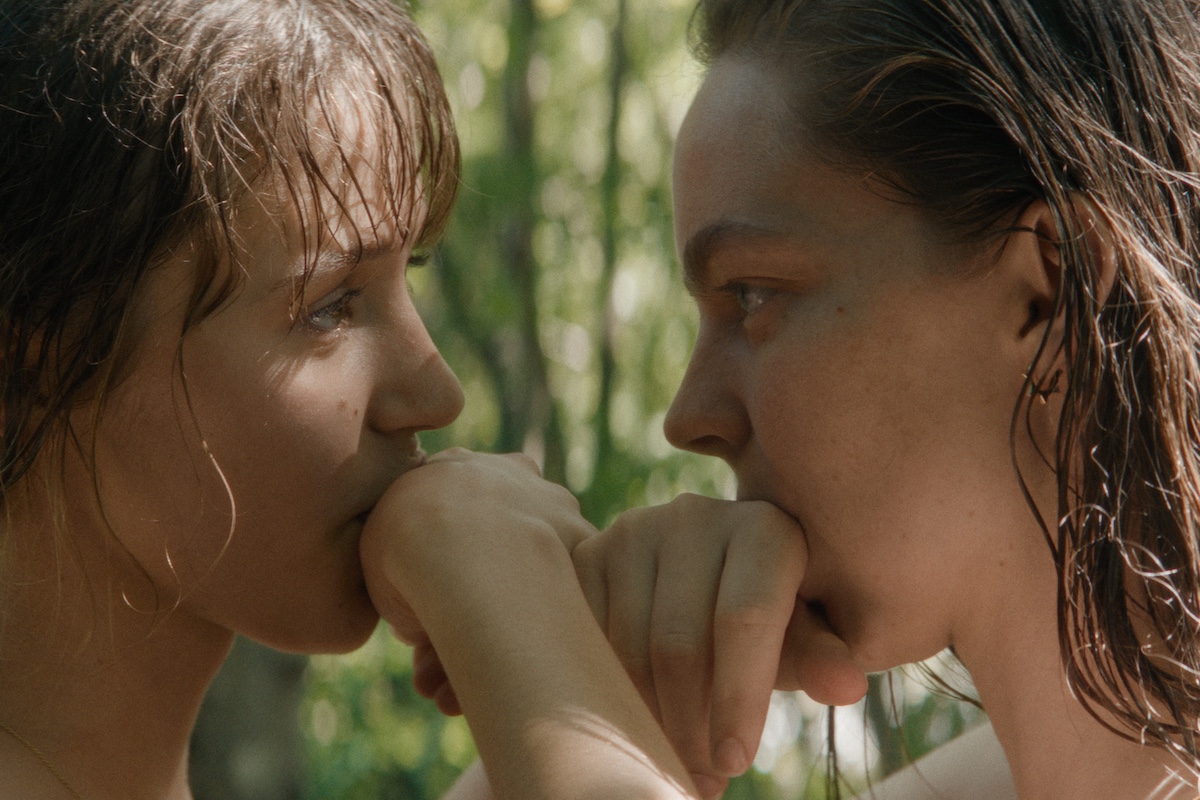
Little Trouble Girls is about a character dealing with a similar frustration with her Catholic upbringing, finding herself in a world where winking affirmation collides with stern disapproval. Everyone seems to know and understand the stirrings she’s experiencing, but they’re also terrified of having that spoken out loud.

Urška Djukić’s new movie is surprisingly subtle given the nearly campy tone it strikes early on. 16-year-old Lucia (Jara Sofija Ostan) is the newest member of an all-girl Slovenian church choir whose rhythmic vocal exercises are intercut with shots of bees pollinating flowers, lest anyone miss the suggestion of budding desire.
As the story develops, though, the decision to make the girls’ confused lust — for one another, as well as for male construction workers at their choir retreat — so apparent serves the purpose of making the movie not about whether such desires exist, but what Lucia is supposed to do about them.
There is every indication that Lucia’s desires are seen and shared, despite the church’s official disapproval. What elevates Little Trouble Girls above the average Catholic guilt coming-of-age movie is its delicate exploration of conscience: Lucia wants to act with integrity, to be honest with herself and with others. The movie’s central heartbreak doesn’t concern a person, it concerns an entire world that punishes Lucia for telling the truth.
Djukić and cowriter Marina Gumzi steer gratifyingly clear of simple tropes: these characters will surprise you and make you think. Lucia’s friends are fun and kind; when a conflict crops up, it feels organic and nuanced. The choirmaster (Sasa Tabakovic) isn’t the leader Lucia needs, but nor is he a monster. A single brief, exquisitely staged, observation by his students contains an implication the film trusts viewers to consider ourselves without being beaten over the head.
By the time it reaches its elegant, understated conclusion, Little Trouble Girls has made an impact that lingers. Djukić’s film is beautifully photographed (Lev Predan Kowarski’s cinematography took honors at Tribeca), but not in such a way as to distract from its themes. Little Trouble Girls understands the power that a few days away can have when you’re young and hopeful, all the more so when that hope is bound to be dashed.
Images courtesy Kino Lorber
Leave a Reply