The second and final season of Andor raises the bar so dramatically on what an adult Star Wars series can be, it nearly escapes the orbit of the franchise that birthed it. Still, there’s a moment in the original Star Wars movie that opened the door for a show like this, a show fans have long awaited.
It’s the moment when Luke Skywalker, returning to his home on Tatooine, finds his aunt and uncle — the only parents he’s ever known — incinerated. The graphic carnage is given Wagnerian weight by John Williams’s score, but isn’t overplayed. Luke has taken his “first step into a larger world,” in more ways than one.
The world of Andor is absolutely vast, and not because of the Force. The show explores a nascent Rebellion that’s heterogeneous in method and philosophy, from the secret military being funded by Mon Mothma (Genevieve O’Reilly) to the independent force led by an impatient Saw Gerrera (Forest Whitaker) to the high-wire spycraft of Luthen Rael (Stellan Skarsgård).
That much was outlined in the show’s acclaimed first season, but the second season is so epic, it makes the initial run feel like mere prelude. Of course, the entire show is a prelude to the movie Rogue One (2016), which itself was an immediate prequel to the original Star Wars (1977).

One of the many remarkable things about what showrunner Tony Gilroy has achieved with Andor is that it leverages the cultural weight of that first film, which birthed a blockbuster franchise and has fired millions of imaginations, without relying on it as an engine of drama. We know how this story ends, but we don’t know how it’s going to get there and what cost the surviving characters will pay.
Where Andor particularly exceeds the thematic limits of the original movies is in just how deeply it explores the human cost of resistance. It’s clear to the characters in the show that the Empire must be stopped, but they give their lives to the cause in ways that don’t just involve throwing themselves into the line of fire — even when that would be easier.
You probably wouldn’t be reading this far if you wanted absolutely airtight defense against spoilers, but I will nonetheless avoid describing concrete plot points or even reveal who appears in the show, beyond the characters already featured in advance trailers. What you risk learning if you read on is some broad information about the structure of the season and the general dynamics that drive the drama.
As assiduous readers of advance press have learned, the 12-episode season is divided into four three-episode arcs, taking place in the years leading up to the Battle of Yavin: the climax of the first film. The structure adds momentum to the season much in the way that a ball rolls more quickly down a wave-like hill than down a straight slope.

Each arc builds toward its own climax, but what that means is very different among the four segments. At every turn, our heroes are fighting to build a coherent rebellion while trying to maintain some semblance of personal meaning in their private lives.
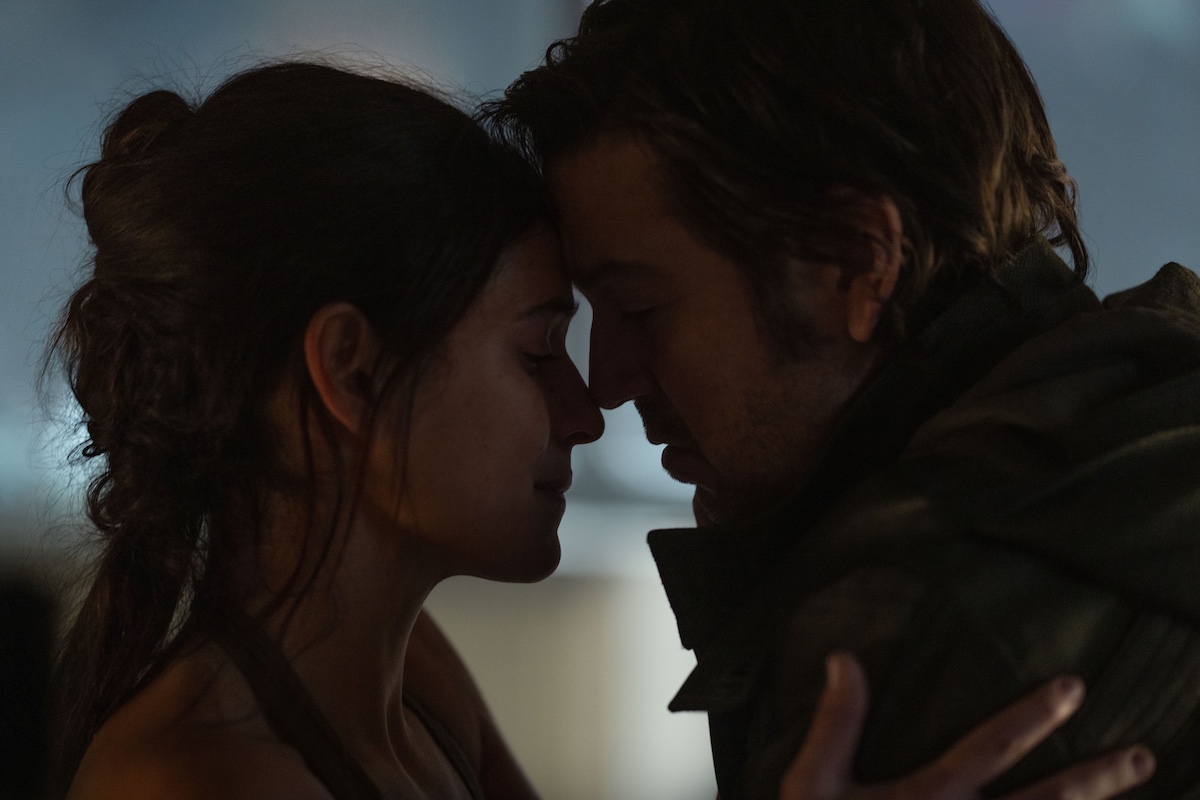
Cassian Andor (Diego Luna) is the linchpin, of course, but many of the show’s most affecting developments turn on Mothma. A character whose role in the original trilogy was to show up for a brief, grave speech in Return of the Jedi, Mothma emerges as the Rebellion’s political leader but, in the Andor era, maintains her role in the Imperial Senate to cover her secret activities and flex whatever remains of that body’s dwindling power.
Leveraging the strengths of a cohesive group of writers and directors, Gilroy keeps the show’s pacing nimble as Andor circles the lives of an interlocking set of key characters including Mothma, whose lavish and ritual-bound life on her home planet of Chandrilla breaks down into a series of chips she can cash to keep the Rebellion afloat. In O’Reilly’s commanding performance, Mothma is human but also resolved: she will do what she must, and swallow the pain.
The situation is different for Andor, who is the right man in the right place for a range of challenging assignments, but can reasonably wonder whether he — unlike the prominent Mothma — really needs to keep paying the personal cost. Andor adds depth to the title character’s dilemma by surrounding him with others who are making the same calculations. If he can get out, can they? Should they?

While a lesser show might keep fans waiting around to see what famous faces might pop up in a show set squarely in the classic Star Wars era, Gilroy doesn’t lean on the characters we know from the movies: he gives us new characters we care about even more. Since we don’t know what will happen to them, we’re on the edge of our seats despite being well aware of what Luke will shortly manage in that Death Star trench run.
The season is a relentless suspense machine, with more tension than fans have experienced since Darth Vader was lowering Han Solo into the carbon freeze chamber. Gilroy and his collaborators ensure that we’re not only acutely aware of the characters’ vulnerability, but that of the Rebellion as a whole. With or without a Death Star, the Empire is capable of crushing the Yavin-based freedom fighters if a single person aware of the base’s location is captured alive.
Tension among Imperial officers has provided fodder for drama ever since the original film, but Andor goes further, tracking the developing relationship between Dedra Meero (Denise Gough) and Syril Karn (Kyle Soller). Both seem committed to the cause, but they’re also ambitious — and in love. One of the show’s most delightfully surprising episodes involves a family dinner with tensions anyone could recognize and that even ruthless villains are, apparently, not immune from.

The new season also expands significantly on the sci-fi action palette of the first season, which was sparing in its recourse to special effects set pieces. Gilroy still seems to resent the need to include alien species — no other Star Wars show is so completely dominated by human characters — and he remains committed to shooting in real-world locations more than it would even seem possible to do.
Except when it comes to spaceships. The thrilling heist sequence from the first season was just a taste of what fans are in for in season two, which has characters hot-rodding all over the galaxy. The opening sequence alone, involving the theft of an experimental Imperial craft, is worth the price of your month’s Disney+ subscription.
The season is beautifully photographed, although the cinematography doesn’t call attention to itself. In keeping with the first season, Andor represents a return to the extraordinarily palpable quality of the first film. This isn’t a space opera for high-flying heroes, but rather the chronicle of ordinary people under the thumb of a military dictatorship. Andor and his fellow Rebels don’t expect to live to see the success of their cause, but they fight anyway.
Luna and Gough give standout performances, along with Skarsgård and Elizabeth Dulau. The latter actor plays Luthen’s assistant, a minor role in the first season but one that grows substantially in the second. With other key female roles played by Adria Arjona, Faye Marsay, and Varada Sethu, Andor again handily passes the Bechdel test — something still notable, while increasingly common, in the Star Wars universe.

Fans will positively gulp this season down, and even doubters will find it hard to look away. For Star Wars as well as other fantastic worlds, Andor demonstrates how tired it is for new shows to lean on Easter eggs (looking at you, Book of Boba Fett). While Ahsoka found success by rewarding fans invested in characters originally developed in animated series, Andor eschews that show’s mystical bent and brings viewers into the trenches with new faces who are gripping in their own right.
It need hardly be said that the show will hit like a ton of bricks in the current political climate. As the Empire works to build the weapon that will permanently silence all opposition, its official version of truth increasingly veers from reality. Mothma’s break from the Senate was depicted at its conclusion in Rebels, but Andor brings viewers in close for the character’s harrowing final years under a failed democracy — and her stirring exit.
One cozy baby blanket, for sale here in the real world and officially licensed by Lucasfilm, declares the “the world needs more rebels.” On the blanket, cute characters seem to welcome infants to the Alliance. Their arms are raised in celebration, but Andor shows why a world that need rebels is not a world any child should be envied for inheriting.
All images © 2022 Lucasfilm Ltd. All Rights Reserved.
Leave a Reply