
I’ve never been a big co-op shopper, but my most recent frustration with co-ops stems from their seeming hypocrisy vis-a-vis caffeine, a molecule that plays a major role in my life.
I work near the Seward Co-op in Minneapolis, and sometimes at lunch I like to stretch my legs and go off in search of a bite to eat and a cold caffeinated beverage. Coke Zero is good; sometimes an energy drink is called for. As co-op shoppers know, the cold + caffeinated family of drinks is not a family of which one should expect to find many members hanging out at a co-op.
Hot caffeine? Sure! All co-ops have coffee, both in brewed and beany forms. Many brag of the high quality of their Fair Trade offerings.
Cold drinks? Absolutely. Ginseng, guava, wheatgrass, goat’s milk, and water of all ethnicities. Got ’em.
But almost none of these cold drinks are caffeinated. Why, co-ops? The caffeine is natural! It is taken out of decaf coffee beans—which you sell. Why can it not be re-purposed in a delicious cold, fizzy beverage?
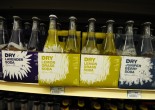
At the Seward Co-op, I finally found an organic energy drink, the can of which notes almost apologetically that it contains 100mg of caffeine—more than a small can of Red Bull, not bad. The fact of that lone drink’s existence, though it satisfied my immediate need for a jolt, just exacerbated my larger frustration with the co-op philosophy. Why, in this full cooler of drinks, are there so few caffeinated options? In mainstream supermarkets of comparable size, there are dozens of options.

Of course, co-ops have to make room for a lot of things that mainstream supermarkets don’t. There’s the vast merch aisle, for starters—the hemp t-shirts, the organic cotton grocery bags, the hats sewn for babies by South American grandmothers while, I imagine, the awkwardly shorn alpacas stand smiling over their shoulders. There are the baby onesies saying grown locally. (I imagine Xavier Roberts visiting co-ops for baby butt-signings.)
Then there are the incense, the ointments, the candles, the waxes, and the miscellaneous tinctures. All supermarkets have toiletry sections, but their definition of “toiletry” generally stops well short of peppermint aromatherapy oil. Why all the holistic health supplies? I guess that since shoppers for caffeine-free pluot pop are also likely to feel themselves in need of Red Sea smelling salts, it’s efficient to sell those items under one roof—but that combination of purpose causes the typical co-op to feel like the combined refrigerator and medicine cabinet of a paranoid, hypochondriac shaman.
Co-ops have most of the other products one might seek at a conventional grocery store, but all in weird alternate-universe versions that present themselves as the closer-to-Gaia options. The fact that these better-for-you, better-for-the-world products so eerily mimic their mainstream equivalents adds to my skepticism about the co-op vision of the world: it’s just like the world you know and love, except it makes you feel less evil. Unless you’re looking for a Coke Zero, in which case it makes you feel downright wicked.
It’s in the bulk product department that co-ops make most sense to me. There, it feels like you actually have to work a little bit for your food, so at least you’ve earned rather than bought your clear conscience. You want that organic peanut butter? You’re going to have to dig that scoop down through the slimy layer of oil and scoop it yourself. It’s gross, and that’s how you know it’s different and better. I totally buy the idea that if we were all willing to do more gross things—scoop our own peanut butter, compost our own trash, fertilize our gardens with the neighbor’s dog shit—we’d have a more sustainable lifestyle. Those are not gross things that I want to do, but I find it totally credible that we’d all be better off if I did.
But here’s the thing with co-ops. Why do they have to solve all the world’s problems under one roof? If all these ideas are so great, why do only these people have them? Why can’t you scoop your own peanut butter at Super-Valu? Why are there no cooperatively run grocery stores that sell Coke Zero? (Chains like Whole Foods tend to be a little less ascetic, but they’re only faux-ops.)

I don’t claim to have a nuanced understanding of the co-op philosophy, which I know to be elaborate. In fact, I deliberately chose not to research it before writing this post, because if I did I’d probably learn all sorts of fascinating things about sustainable lifestyles and the destructiveness of conventional consumerism that would deflate my interest in going on a rant, and then I would have had to find something else to rant about today.
My dislike for co-ops comes specifically from the fact that, having replicated in holistic form nearly the entire contents of Rainbow Foods, they arbitrarily decided to stop at the caffeinated section of the soft drink cooler—but more generally, I’m suspicious of the fuzzy idealism that pervades co-op culture and causes me to question whether co-ops really make sense.
I acknowledge the real problems that co-ops are addressing—environmental depredation, labor exploitation, unhealthy industrial food production—but I’m just not sure whether I trust those beaming people slathered in beeswax nipple balm to solve them. Why do the bespectacled, braided men and women working at the Wedge Co-op look so much happier than the hoop-earringed, nail-polished cashiers at SuperAmerica across the street? Is it really just that the Wedge staffers are happy to be making responsible decisions regarding the stewardship of Mother Earth, and the SA staffers haven’t quite figured that out yet?
I look at co-op products, and I see some that you know must be organic and sustainable, because they don’t meet modern standards of product engineering. (That peanut butter? Can’t keep it together. The toothpaste? Made with baking soda and tree sap, and tastes like it. Have you ever tried to unclog your sink with natural-enzyme-fueled Drano? Don’t bother.) Others are far better than their mainstream equivalents, usually because they contain choice ingredients fastidiously prepared. (That thick brick of bread? It contains 38 seeds gathered on six continents. That salmon? Raised from boyhood by a sisterhood of Buddhist nuns. Those cookies? Baked by a vegan who knew that to survive as a vegan, she’d have to devote two decades of her life to mastering the art of baking without stealing fetal fodder from chickens.)
Co-op shoppers buy them all, and drive off poorer of purse but lighter of heart. A clean conscience doesn’t come cheap, and it’s apparently incompatible with cold caffeine.


Leave a Reply